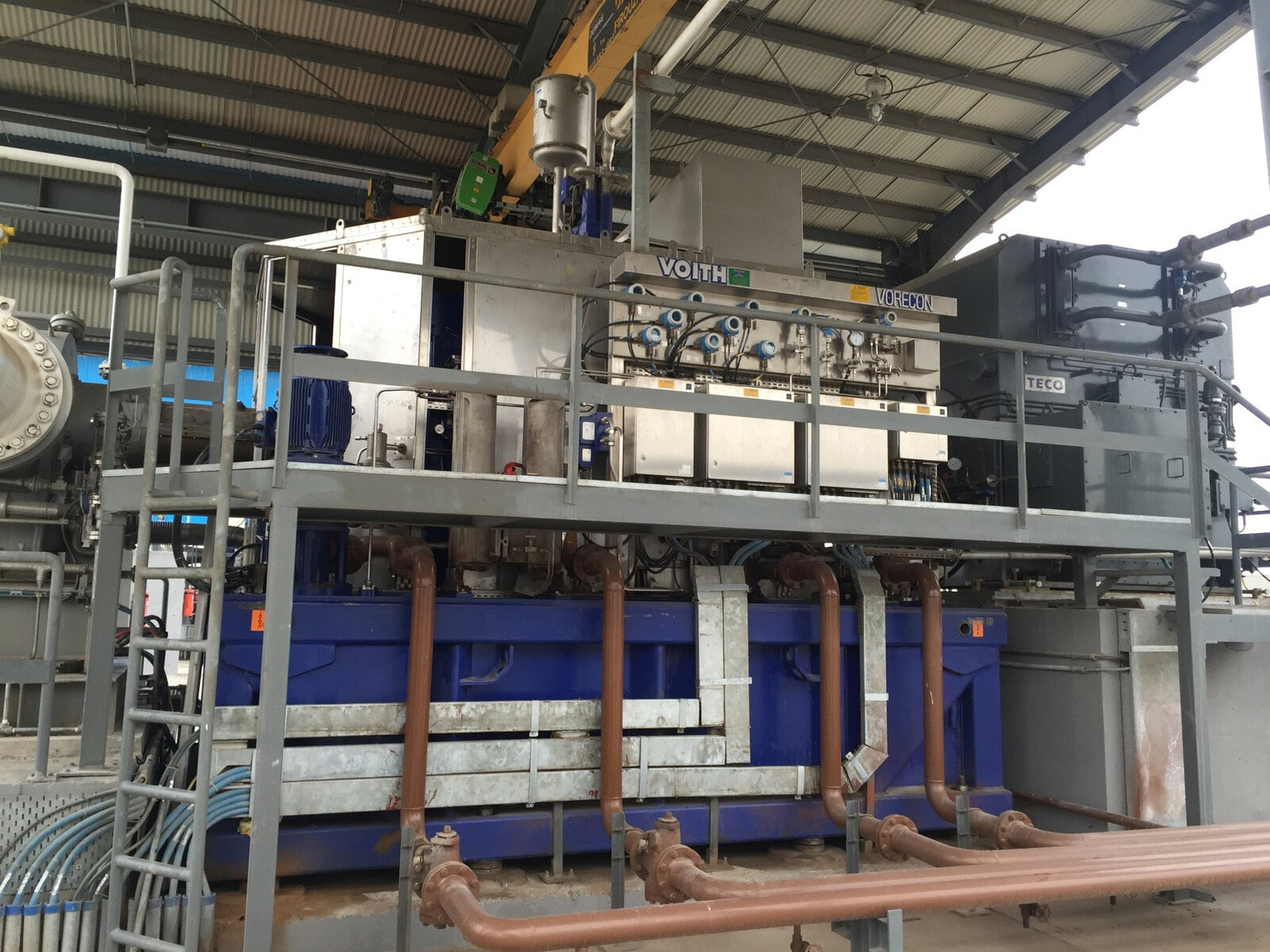
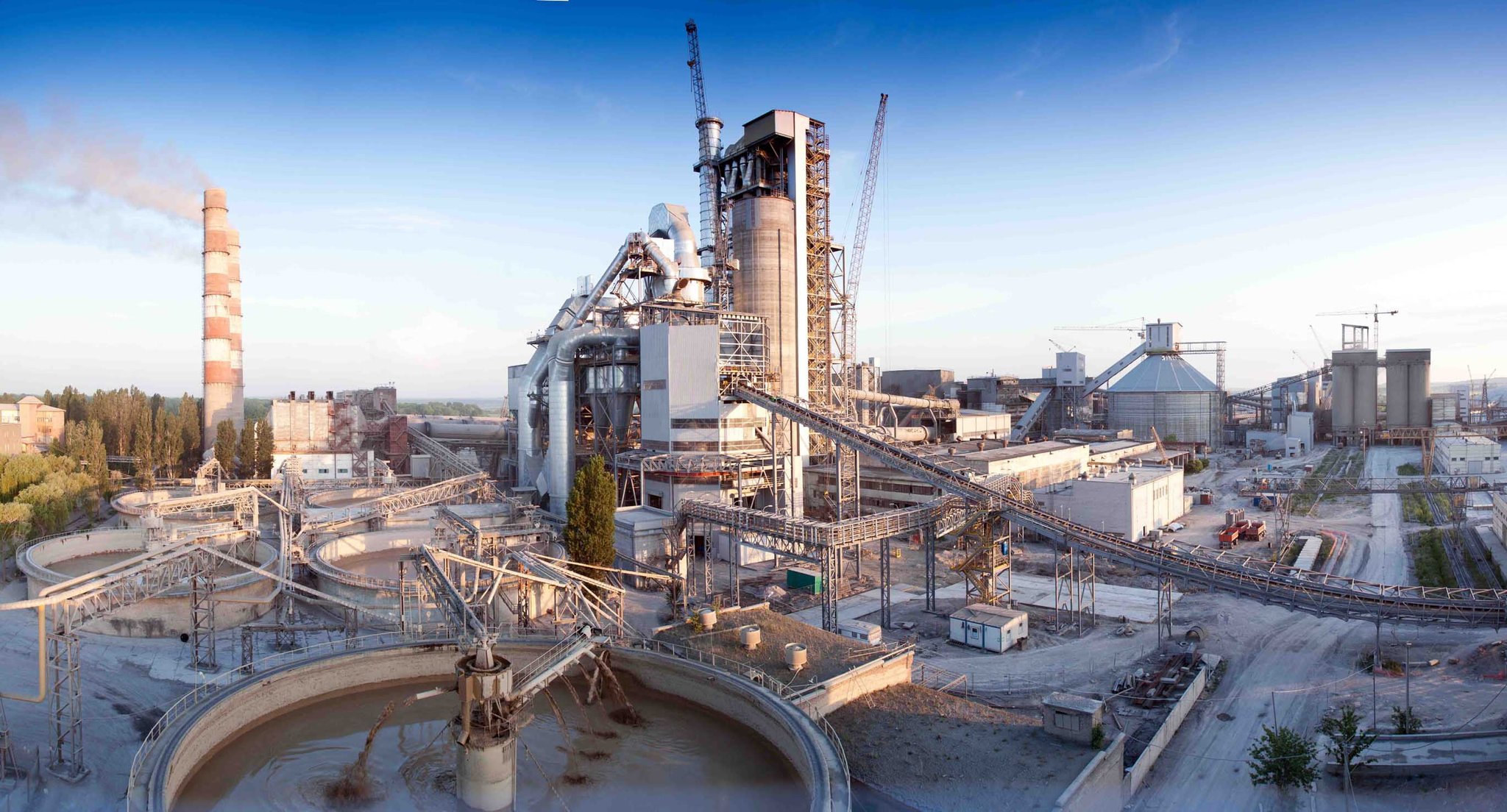
Cement applications
Cement plants depend on rotary equipment operating under dust, heat, vibration, and continuous duty.
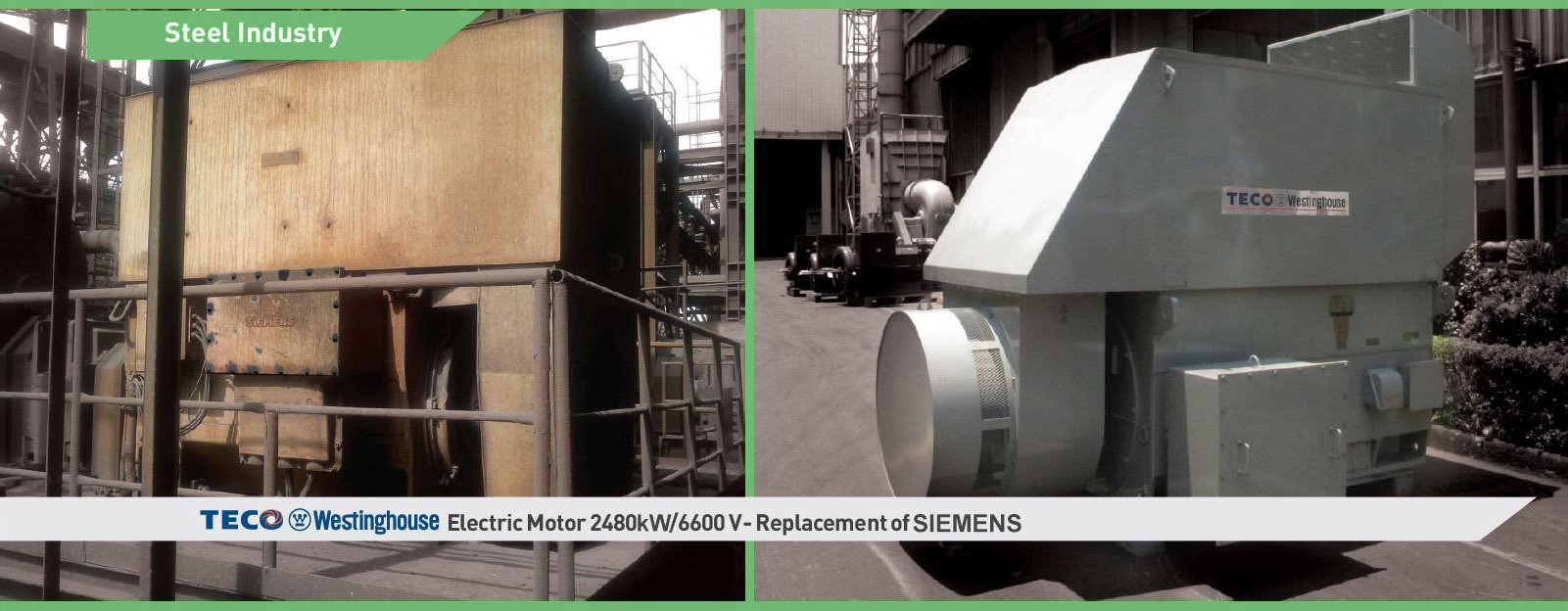
Recovered case material includes ABB, VEM, Elin, and slip-ring motor replacement projects with high efficiency and harsh ambient requirements.
- Kiln drives
- ID fans
- Cement mills
- Feeders
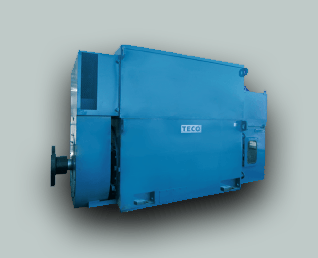
Relevant case studies
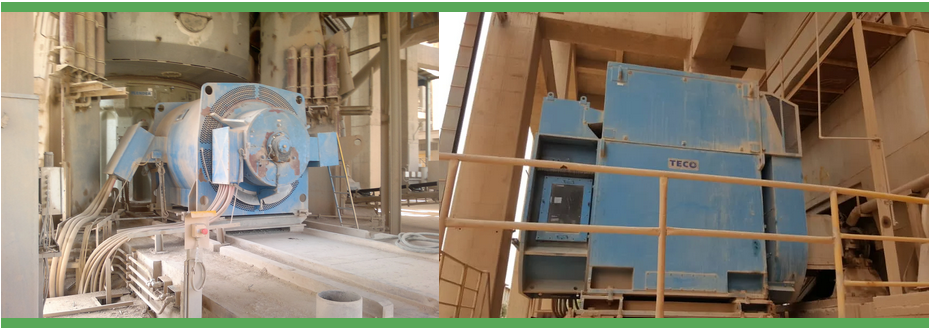
Cooling upgrade for 4,600 kW replacement motor
An ELIN motor replacement was redesigned with an upgraded cooling system while preserving the installation envelope.
Torque and speed-curve matched replacement
A replacement motor design was matched against the original speed-torque behavior and driven-machine load curve.
Engineering notes for this sector
PAM two-speed controlled-flow operation
Pole Amplitude Modulation motors provide two fixed speeds from a single winding, helping pumps and fans reduce energy use without a full variable-frequency package.
- Single-winding, two-speed squirrel cage construction
- Oil-filled five-pole speed-changing switch is typically installed close to the motor
- Lower-speed starting reduces inrush current and thermal stress
Load-sharing replacement motors
When two motors drive one machine in parallel, replacing one motor requires tight matching of electrical and mechanical behavior so load sharing remains stable.
- Match torque curve, speed slip, efficiency, inertia, cooling, and starting behavior
- Preserve shaft height, shaft end, feet, terminal box, and coupling interface
- Relevant to HPGR, mills, pumps, fans, compressors, and other paired-drive systems
Cooling system enhancement
Aging motors often need improved cooling to handle hotter ambient conditions and longer duty cycles while preserving the existing mounting envelope.
- Review cooling path, airflow, heat exchanger selection, and cooling class
- Improve thermal margin without changing the foundation, coupling, or terminal arrangement
- Recovered example: 4,600 kW motor cooling upgraded from IC511 to IC516 while frame size reduced from 1250 mm to 900 mm
Identical terminal-box replacement
Replacement motors can be designed with identical main and auxiliary terminal boxes to avoid site cable, terminal, and commissioning changes.
- Match dimensions, cable connections, and terminal locations
- Reduce shutdown risk during commissioning
- Especially useful in brownfield replacements where cable routing is fixed
Torque and speed-curve matching
Replacement designs must consider existing load curves, starting current, and speed-torque behavior so the new motor remains compatible with the driven machine.
- Match original speed-torque curve and starting behavior
- Reduce inrush current where possible
- Keep adequate torque safety factor during network voltage drop and soft-start operation
VFD-compatible motor replacement
VFD-compatible motors require review of the original drive design, harmonic effects, insulation stress, and the ability to operate without changing existing drive settings.
- Account for THD and high-voltage spike insulation stress
- Use motor and VFD design data during replacement engineering
- Witness testing can simulate real operating conditions and load
DC-to-AC conversion
Old DC motors can be replaced with AC motors and VFDs when output characteristics are matched to protect the driven machine and process.
- Match output characteristics of the existing DC motor
- Maintain dimensional and mechanical interfaces
- Requires direct access to experienced motor and drive design teams
Spare-parts inventory continuity
Replacement motors can be designed around existing spare-parts inventories to reduce stock duplication and maintenance cost.
- Consider existing bearings, sleeve bearings, carbon brushes, and other maintained components
- Useful for large plants with high-value motor spares already in stock
- Supports long-term maintenance continuity